
Family Nurse Practitioner
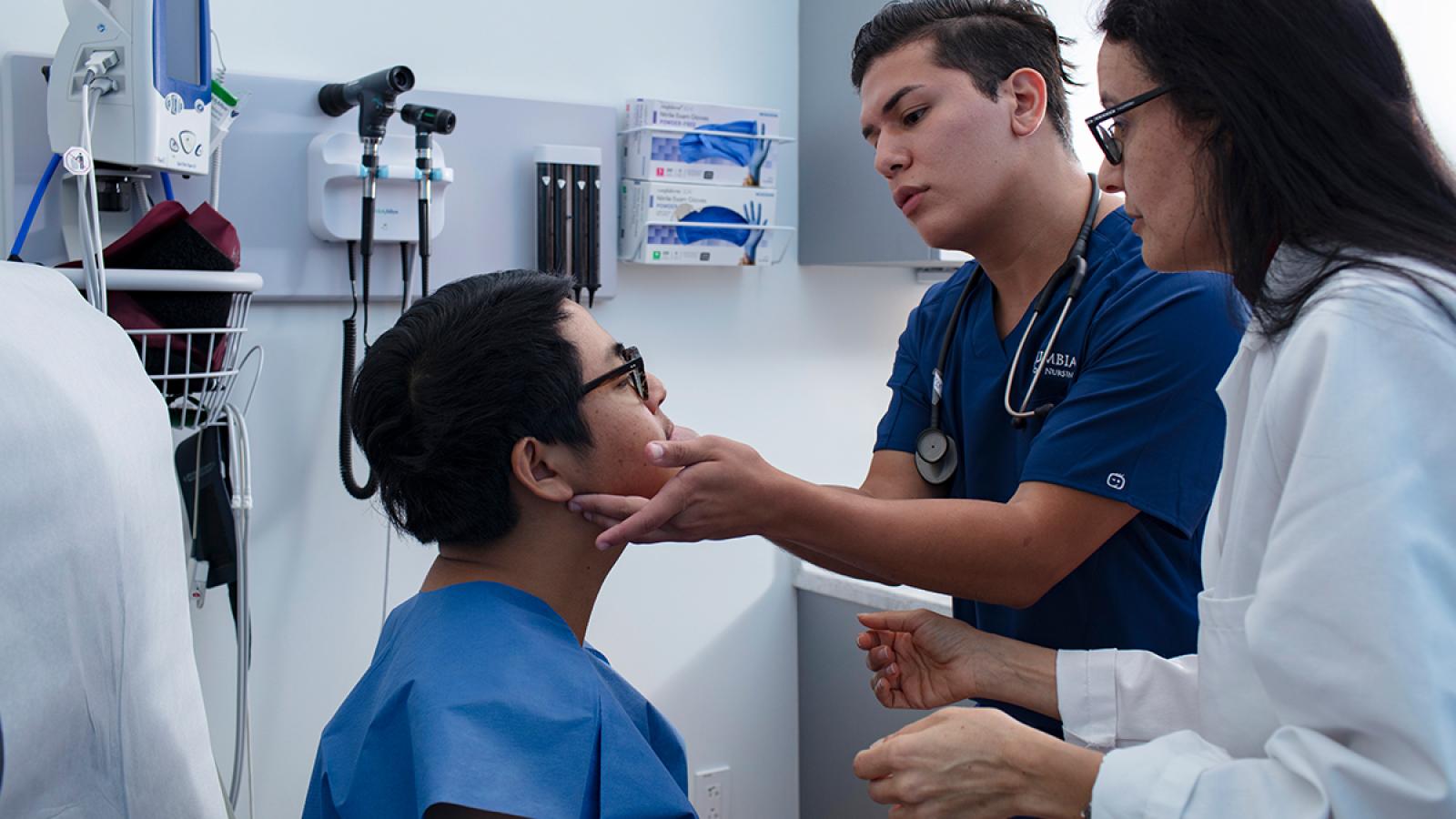
The Family Nurse Practitioner Program is designed to prepare nurses to deliver primary health care to families in a variety of settings. Students follow patients through the life cycle utilizing obstetric, pediatric, gynecologic, as well as adult and geriatric primary care diagnostic and management skills.
The scope of practice of the family nurse practitioner is based on a team approach. An interdependent member of the health care team, the FNP provides primary care through the following means:
- Documentation of individual and family health history
- Physical assessment
- Diagnostic, therapeutic, and educational care plans
- Collaboration with physicians and other health care professionals
- Referral to appropriate health care providers
- Coordination of health care
Clinical sites are available in the tri-state area and beyond, and can be permanent or rotating. Clinical sites vary in setting and students are assigned at hospitals, outpatient clinics, home care, or schools. View the list of clinical sites.
Graduates are eligible to take the certifying examination offered by the American Nurses Association and the American Academy of Nurse Practitioners. Graduates find positions in a variety of settings such as outpatient clinics, community health centers, private practice offices, health departments, homeless shelters, chronic care facilities, schools, day care programs, hospices, homes, and acute care settings.
Curriculum
Students will complete approximately two years of coursework to complete degree requirements. Courses will include lecture, clinical, simulation, and final intensive practicum.
The curriculum is provided to specify the academic requirements of the program. Please be advised that this program plan is a sample, and individual plans of study may vary and are reviewed and approved by the program director. Progression in the program is contingent upon meeting academic policies.
The Full-Time Program: Students will complete approximately 2.5 years of coursework to complete degree requirements.
The DNP Extended Pathway Program: Students will complete approximately 3.5 years of coursework to complete degree requirements.
Courses will include lecture, clinical , simulation and the final intensive practicum.

Courses
Utilizing a systems approach and a background in basic physical assessment, advanced physical assessment skills are studied. The identification and interpretation of abnormalities in the physical exam are emphasized in depth. The approach to the development of the differential diagnosis is introduced. The goal of this course is to provide the critical thinking necessary for the beginning advanced practice nursing student to analyze history and physical exam data.
This course is the first of two sequential courses that provide an in-depth exploration of human physiology and pathophysiology, with an emphasis on the relationship between health and the alterations leading to disease. Students will focus on the etiology, pathogenic mechanisms, clinical features, and therapeutic interventions of commonly occurring diseases manifesting in specific physiologic processes or organ systems.
Part two of two. In this course we will examine the normal physiological function of organ systems, the mechanisms for the maintenance of health, and the pathophysiological alterations in body function that lead to disease. Each class will focus on a specific physiologic process or organ system. We will pay particular focus to diseases that commonly occur across the lifespan, examining common etiologies, pathogenic mechanisms, clinical manifestations, and common treatments of each.
This clinical course is designed to further develop the role of the student to provide care to individuals with complex, comorbid, advanced, or terminal illness and their families.
This is the first of three consecutive courses focusing on utilizing a systems and developmental approach in primary care. This course will focus on the differential diagnosis and comprehensive care management of commonly encountered acute and chronic physical and mental health illnesses as they affect individuals across the lifespan. For each system studied, health assessment, diagnostic findings, and multi-modal management will be highlighted.
This second course of three consecutive courses focuses on using a systems and developmental approach to expand the knowledge of the advanced practice student. This course will focus on the differential diagnosis and comprehensive multi-modal management of commonly encountered acute and chronic physical and mental health illnesses as they affect individuals across the lifespan. Emphasis will be placed on the age specific biopsychosocial variables influencing those health problems and behaviors which are most likely to present, and are most amenable to management in a community setting.
This is the third course of three consecutive courses focusing on a systems and developmental approach in primary care with emphasis on risk assessment, comorbidities and acuity to determine the most appropriate level of care. This course will focus on the differential diagnosis and comprehensive management of commonly encountered acute and chronic physical and mental health illnesses as they affect individuals across the lifespan.
This course will present Family Systems Theory as it applies to families across the lifespan. It will apply the concepts of Family Systems Theory to the understanding and assessment of the family life cycle from a multi-generation and multi-cultural perspective. The conceptual framework will assist the clinician in the provision of family-centered primary care.
The clinical practicum is designed to prepare the students to provide primary care across the lifespan focusing on health maintenance. The clinical experience will familiarize the student with age-appropriate physical, cognitive and emotional development, routine well and episodic care as well as identifying social determinants of health and health disparities in primary care.
This course covers the broad scope of preconception, prenatal, and postnatal care including theoretical and practical knowledge for the essentially uncomplicated childbearing period. Routine care, risk assessment, and commonly encountered complications will be reviewed with a strong focus on the physiological, social, emotional, and educational components of preconception, prenatal, and postnatal care.
This seminar course will assist the FNP students to integrate knowledge learned to develop clinical reasoning skills and medical decision making in the delivery of primary care to patients across the lifespan. The focus will be on the provision of evidence-based care in the assessment and treatment of individuals who present to primary care for acute and well encounters incorporating social determinants of health and health disparities.
This course is designed to introduce the student to the role of the nurse practitioner as a provider of community centered family primary care. The focus will be on health maintenance and illness prevention.
This core course examines contextual contributors to health status and the current social, legal, and political determinants of healthcare systems, emphasizing the U.S. system. Issues are explored to understand their impact on current and future delivery of health care, in particular on advanced practice nursing. The class focuses on how to bring the professional values of nursing to bear in policy debate and how nurses partner in the policy process to improve health outcomes of populations and quality of the healthcare delivery system.
The purpose of this course is to critically analyze healthcare policy in the US. Included is a focus on the advanced practice nurse role in shaping and influencing policy through advocacy and leadership to improve patient outcomes.
This course is designed to provide the student with a systematic approach to the delivery of health promotion and disease prevention in primary health care to individuals, families, communities, and aggregate populations.
This course is intended to provide a strong foundation in the concepts of genetics and clinical applicability of genomic concepts commonly seen in advance practice nurses’ clinical practice. Both classical Mendelian and molecular genetics will be examined, in order to provide a knowledge base that will enable the advanced practice nurse to integrate genetic and genomic knowledge into clinical practice. Using a case discussion approach, clinical issues of genetics testing, genetic exceptionalism, individualized risk assessments and predictions are explored throughout their life span.
This course is designed to provide the student with the knowledge and skills regarding the uses of information technology to support evidence-based practice. The course will provide an overview of informatics topics of most relevance to evidence-based practice including: computer systems and system development; standardized clinical terminology; informatics standards; electronic health records; retrieval and critical analysis of digital data, information, and knowledge; clinical decision making; decision support; decision analysis; shared decision making; and computer aided instruction.
Aimed at increasing student awareness of the prevalence, context, dynamics, and potential outcomes of interpersonal violence (IPV), the goal of this course is to provide advanced practice nurses with the information needed for prevention, identification, assessment appropriate intervention, and resource referral for clients and families who are at risk for, have a history with, or are currently experiencing IPV. Course content will explore the dynamics, causes and consequences of IPV, specifically: domestic violence, child abuse, elder abuse, and sexual assault.
This course is designed for graduate nurses to provide them with the skills to understand and utilize research evidence in decisions about clinical practice. The course is designed to help graduate nurses articulate relevant practice-based questions, search the literature to identify relevant evidence, evaluate the quality of research on which the evidence is based, and discuss the application of the evidence in clinical practice to improve quality of care.
This online, self-directed course is the first of two designed to introduce students to scholarly writing and dissemination for clinicians. The course provides students with practical information, exercises, and resources for successful clinical manuscript preparation and clinical conference poster and oral presentation. The course introduces students to fundamental skills for scholarly writing including strategies for identifying topics and constructing clinical questions and understanding how different kinds of clinical questions are best answered by different approaches to scholarly writing. Students learn to differentiate among quality improvement projects, research projects, types of literature reviews, case studies and clinical practice manuscripts. Students utilize electronic resources for literature searches and citation management and develop familiarity with professional journals and conferences in their specialty areas. This course content allows for the synthesis and application of the skills and resources developed over the semester and will serve as the basis for a draft of a scholarly product (manuscript, poster, podium presentation) prepared in Scholarly Writing II. As a result, students are prepared for a lifelong approach to integrating scholarship into clinical practice.
This course is designed to introduce the student to routine and episodic primary care of the pediatric patient. The focus will be placed on age-appropriate physical, cognitive, and emotional development, as well as frequently encountered illnesses seen in an outpatient setting.
This clinical is designed to provide students the opportunity to manage patients in a primary care, specialty-care or global health care setting.
This course focuses on the professional identity of the advanced practice nurse (APN) role, exploring the history of advanced practice nursing and reviewing current legal issues and state and federal regulatory policies, billing and reimbursement. The importance of the APN contributing to a workplace environment that promotes a culture of civility, accountability and self-care is examined.
This course is designed to provide the student with the knowledge and skills necessary to serve as a member and lead interdisciplinary groups in organizational assessment to identify systems issues and facilitate organization-wide changes in practice delivery utilizing quality improvement strategies. Course content focusses on understanding systems concepts and thinking to achieve results in complex health care delivery systems. Frameworks, approaches, and tools that foster critical thinking are examined as mechanisms to formulate vital questions, gather and assess relevant information, develop well-reasoned conclusions, test conclusions against relevant standards, compare conclusions with alternative systems of thought, and communicate effectively throughout the process.
Utilizing a background in basic physical assessment, advanced practice nursing students apply the didactic content introduced in N8786 to this clinical practicum. Advanced physical assessment skills and the identification of abnormalities in the physical exam and appropriate documentation are emphasized with a focus on the ability to integrate systems appropriately. The complete pelvic exam is included. As well as complete male genital exam.
The clinical practicum builds upon knowledge obtained in Diagnosis and Management. This practicum is designed to expand the role of the nurse practitioner student to provide primary care to complex patients, families and communities, in an outpatient setting, focusing on vulnerable populations. The clinical experience will strengthen the student skills knowledge of age-appropriate physical, cognitive and emotional development. Recognizing the multiple expressions of chronic physical and mental illness causing various complications that lead to impairment and disability. The goal of the practicum is to prepare the students for the delivery of comprehensive primary care.
This is the second of two courses designed to build skills for scholarly writing and dissemination for clinicians. Building on Scholarly Writing and Dissemination I, the course continues to provide practical information and exercises that promote successful clinical manuscript preparation and scholarly dissemination. The emphasis throughout the course is on promoting clear, concise, and well-structured scholarly writing, and adhering to the conventions and standards of scientific writing and peer review. The course prepares students for a lifelong approach to integrating scholarship into clinical practice.
This course will introduce the DNP student to clinical decision making and evidence-based practice for the provision of primary care to individuals across the lifespan. Utilizing the case narrative format and DNP Competencies as a framework, the student will analyze clinical decisions and apply evidence for best practice. Case studies derived from complimentary practicum that reflect the critical thinking skills needed to diagnose and manage acute and chronic illness will be presented and critiqued.
This course addresses the application of epidemiology and environmental approaches to inform the clinical practice of health care of individuals. An understanding of health sciences based on groups of people, including environmental health, occupational health, and some aspects of genetics, can orient the practitioner with an individual patient. These external influences are modified through social, cultural, and behavioral factors. Addressing these factors should help to anticipate and improve patient outcomes.
This course is designed to enhance the clinical reasoning and decision-making skills of Family Nurse Practitioner (FNP) students through case-based learning, evidence-based practice application, and faculty-guided small group discussions. Students will engage in peer collaboration, critical thinking exercises, and case presentations to refine their approach to patient evaluation, diagnosis, and management. Students will develop effective documentation and interprofessional communication skills.
The clinical practicum builds upon knowledge obtained in Diagnosis and Management II. This practicum is designed to expand the role of the nurse practitioner student to provide primary care to complex patients, families and communities, in an outpatient setting across the lifespan. The goal of the practicum is to prepare the students for the delivery of comprehensive primary care. The practicum focuses on chronic physical and mental illness causing various complications.
This course is designed to expand the clinical reasoning, diagnostic acumen, and management skills of Family Nurse Practitioner (FNP) students when dealing with complex patient cases. Emphasizing multifaceted conditions, comorbidities, and intricate care coordination, students will analyze patient cases requiring advanced critical thinking and interprofessional collaboration.
The DNP student will provide comprehensive, evidence-based care to patients and promote optimal patient outcomes. The DNP student will demonstrate integration of comprehensive assessment, advanced differential diagnosis, therapeutic intervention, synthesis of evidence-based practice while managing patients in a clinical setting.
This course focuses on the development of a fundamental knowledge base for the assessment, diagnosis, and management of patients presenting for sexual and reproductive healthcare in primary care settings. Topics include the most common sexual and reproductive health maintenance issues and challenges across the life cycle. This course include an overview of deviations from sexual and reproductive well-being that are within the scope of practice of the advanced practice nurse practitioner and identifies conditions that require collaborative management and/or referral. A simulation lab session concurrent to the course enhances and grounds the didactic experience.
This course is designed to provide the tools for the doctorally prepared nurse to evaluate, translate and integrate published research results into clinical practice. During the course, students will learn how to conceptualize clinical practice problems and transform them into answerable clinical research questions, how to search for the best clinical evidence, and how to assess clinical evidence using basic epidemiological, biostatistical and scientific principles. The course will culminate in a systematic review or meta-analysis of a body of research relevant to advanced practice nursing.
The DNP Intensive Portfolio Advisement is designed to provide DNP students with guidance to demonstrate achievement of intended program outcomes and advanced practice competencies through written case narratives from clinical based encounters and oral presentation. The student will be assigned an advisor who will review all case narrative work and provide guidance as indicated.
This course is designed to enhance the clinical reasoning and decision-making skills of Family Nurse Practitioner (FNP) students through case-based learning, evidence-based practice application, and faculty-guided small group discussions. Students will engage in peer collaboration, critical thinking exercises, and case presentations to refine their approach to patient evaluation, diagnosis, and management. Students will develop professional identity, ethical practice and self-awareness for advanced practice nursing.