

Ethical Decision-Making, Crisis Training, and Movement-Based Dementia Interventions are Highlighted at IPE Day
On April 7, 2026, Columbia Nursing hosted sessions at Interprofessional Education (IPE) Day, a signature event created in 2019 that brings together students and faculty from across the health sciences schools at Columbia University Irving Medical Center (CUIMC) to learn with, from, and about one another. IPE Day aims to dissolve professional silos by emphasizing mutual, respectful, and responsible interprofessional collaboration in caring for patients and their families. This year’s theme, “Health in Times of Crisis,” highlighted urgent, team-based approaches to care due to the increasingly complex health landscape.
The morning of IPE Day 2026 began with a plenary session which explored how race, gender, socioeconomic status, immigration status, and chronic illness shape crisis outcomes, emphasizing the importance of interprofessional collaboration. The session featured Nathaniel Kratz, MD, assistant professor at Vagelos College of Physicians and Surgeons (VP&S), and was moderated by Jeanne Churchill, DNP, assistant professor at Columbia Nursing and faculty representative on the IPE Committee and Taskforce, alongside Mary Sormanti, PhD, professor at the School of Social Work.
Churchill also led a “Difficult Ethical Case Studies in Pediatrics,” workshop where students acted as members of a pediatric ethics committee, working in groups to analyze and make decisions on complex pediatric cases. A panel of professionals, including a neonatologist, family nurse practitioner, social worker, and chaplain, provided feedback on their recommendations and shared the real-world outcomes of each case.
“Students found the workshop extremely engaging and helpful in navigating complex pediatric ethical cases. The session highlighted how to balance the best interests of the child with parental authority, often emphasizing advocacy due to the patient’s limited autonomy,” says Churchill.
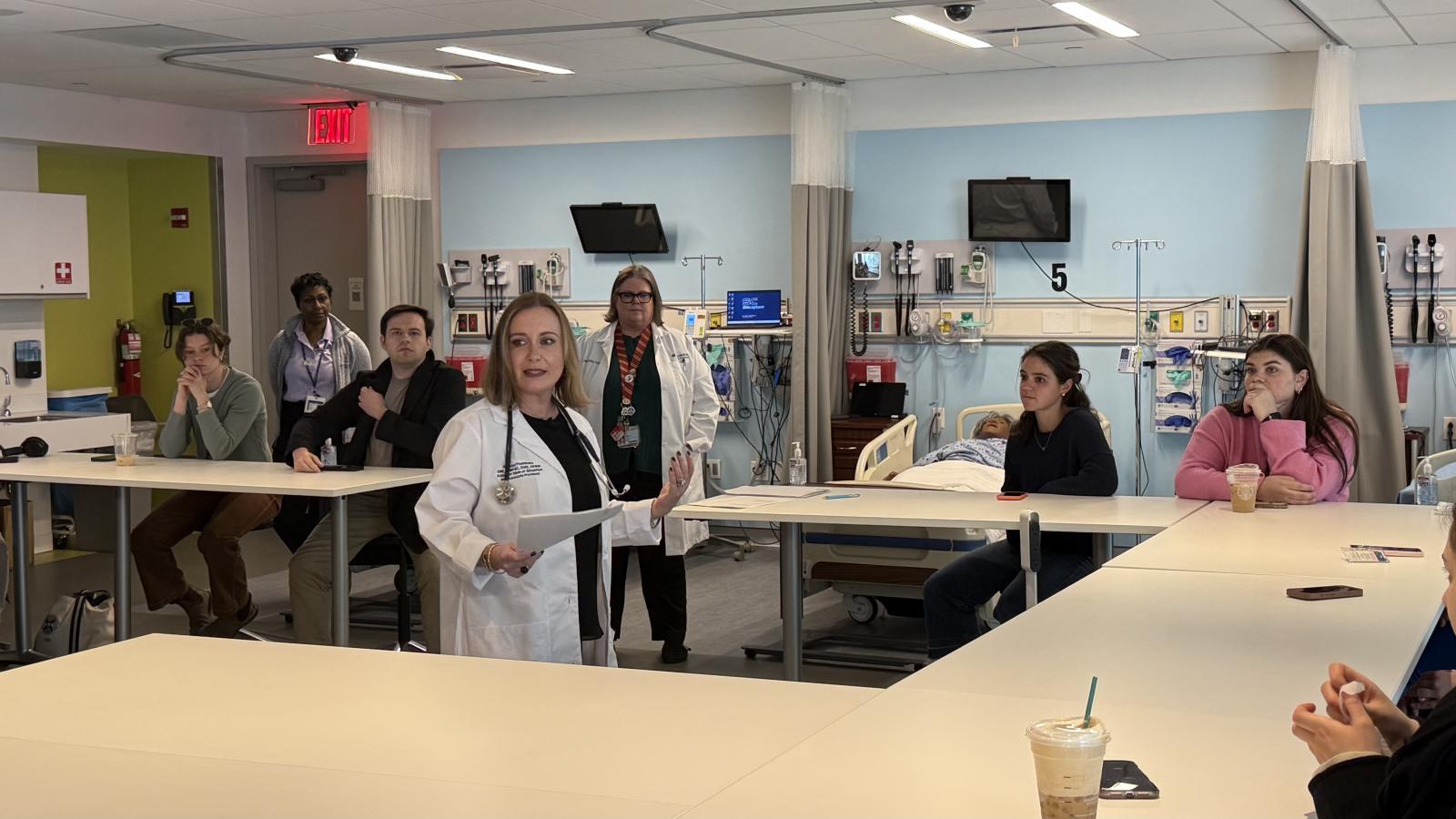
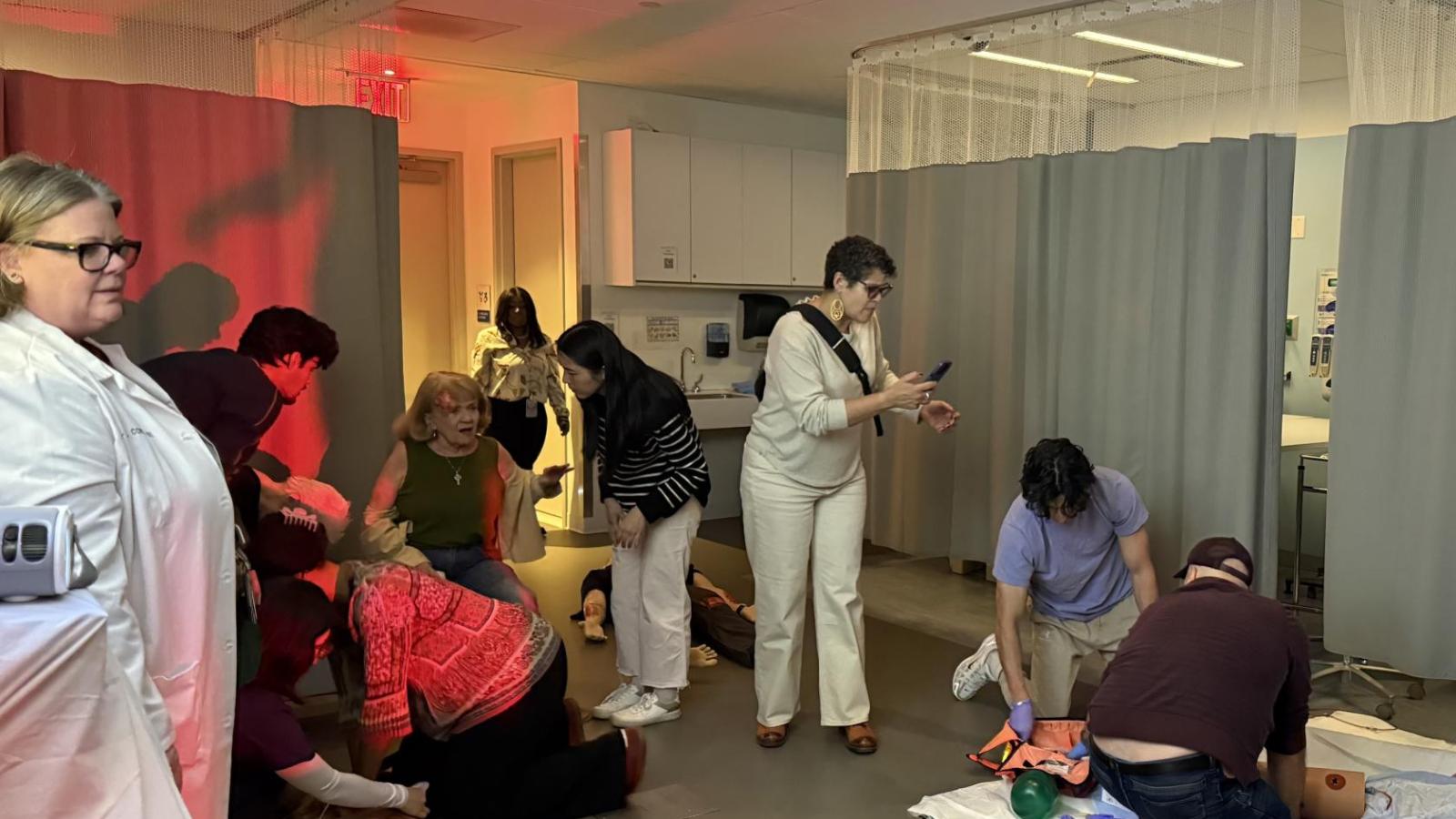
In the simulation center, associate dean Natalya Pasklinsky, DNP, associate director Merona Hollingsworth, and simulation faculty Kristy Deyeso, DNP, led “Thinking Under Pressure: Interprofessional Teamwork and Critical Decision-Making in a Mass Casualty Simulation.” This interactive workshop used a train derailment scenario to help strengthen interprofessional teamwork and critical thinking under pressure. Students from multiple health professions collaborated to assess patients, prioritize care, and manage limited resources in a realistic scenario with patient actors.
During the debrief, participants described the simulation as both chaotic and engaging. They highlighted strategies used to manage patient care, including asking targeted questions, assessing pulses, and evaluating airways.
In addition to these sessions, Columbia Nursing offered others that explored different dimensions of collaborative care, including:
Sim Squad: Teamwork and Communication in Action
Led by Pasklinsky and Deyeso, this session engaged students in practicing de-escalation techniques with an agitated team member and patient, focusing on miscommunication during a high-stress discharge scenario.
Moving Memories: Music, Movement and Mental Health in Dementia
Led by Columbia Nursing students Linel Salcedo and Dayriliana Noa Guzman along with social work students Ava Hearn, Shawnette Spence-Johnstone, and Kalyn Espinal and VP&S' Institute of Human Nutrition student Veronica Scriven, this workshop used chair-based movements and culturally meaningful dances like salsa, merengue and bachata to educate participants on non-pharmacologic interventions that can be used to care for individuals with dementia.
Together, these sessions demonstrated the importance of collaboration, adaptability, and innovative thinking in preparing the next generation of health professionals.